James Smith Muscle Gain Calculator — Stop Guessing, Start Growing (2026)
You’re training hard. You’re eating more than before.But when you look in the mirror — nothing much has changed.
Sound familiar?
Here’s the truth nobody tells you: the problem isn’t yours. It’s your numbers. Most people are either eating too little to build muscle — or eating too much and just gaining fat. Without knowing your exact calorie and macro targets, you’re basically guessing, and guessing wastes months of hard work. That’s where the James Smith Muscle Gain Calculator comes in.
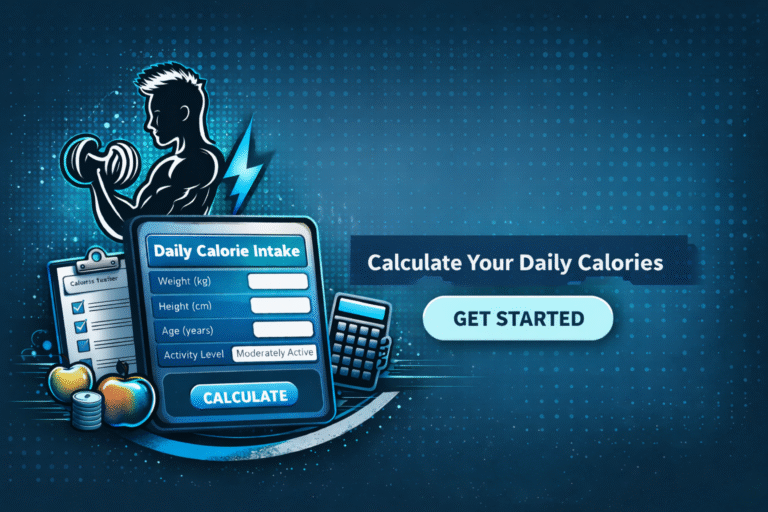
Enter your age, weight, height, and activity level — and in seconds, you get your personalized daily calorie target, protein goal, and complete macro breakdown.No bro-science. No generic plans. Just your numbers, built around your body.Ready to stop guessing and start growing? Let’s break it all down.
Editorial & Accuracy Note
This article was written and reviewed by our Fitness & Nutrition Content Team, based on established BMR/TDEE methodology.Last reviewed: July 2026
What Is the James Smith Muscle Gain Calculator?
The James Smith Muscle Gain Calculator is a free online tool designed to help you gain lean muscle in a structured, sustainable way. It uses your body statistics and daily activity level to estimate how many calories you should consume each day — and how to split them between protein, carbs, and fats.
The main goal is simple: keep you in a smart calorie surplus so you build muscle while keeping unnecessary fat gain under control.
It is also commonly known as a:
- Macro calculator for muscle gain
- Calorie calculator for muscle gain
- Lean bulk calculator
- Muscle gain nutrition calculator
Can You Build Muscle Without a Calorie Surplus?
Building muscle requires enough energy, protein, and resistance training. While some beginners and people returning to training may gain muscle without a calorie surplus, a small surplus can make muscle growth easier for many.
The James Smith Muscle Gain Calculator helps estimate your calorie intake, protein target, and macronutrient breakdown, which you can use as a starting point for your muscle-building goal.
How the James Smith Muscle Gain Calculator Works
The calculator works in a simple, step-by-step process:
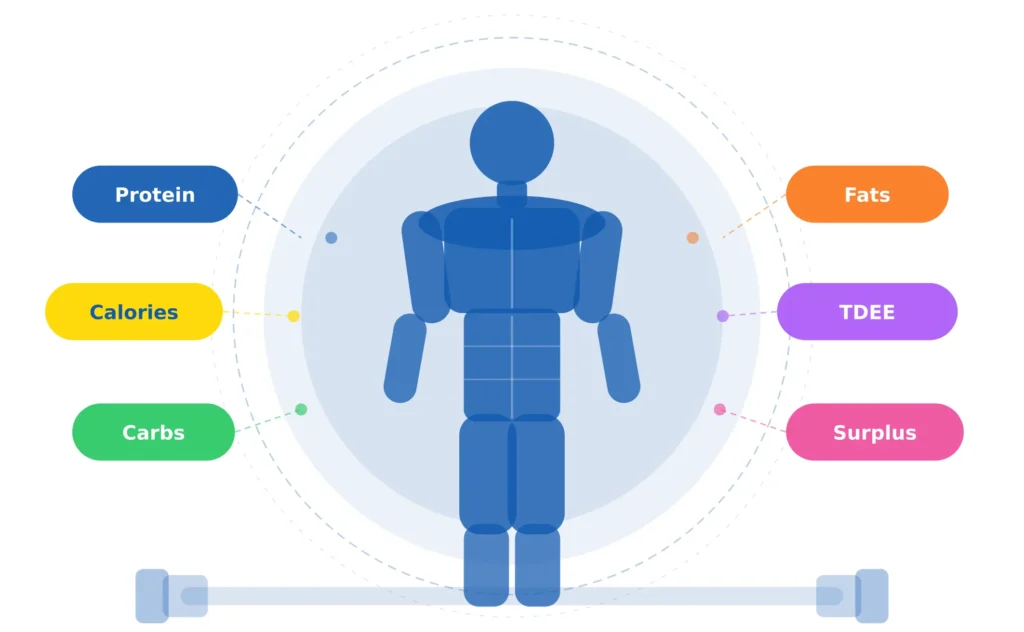
- Step 1: It calculates your Basal Metabolic Rate (BMR) — the calories your body needs just to function at rest.
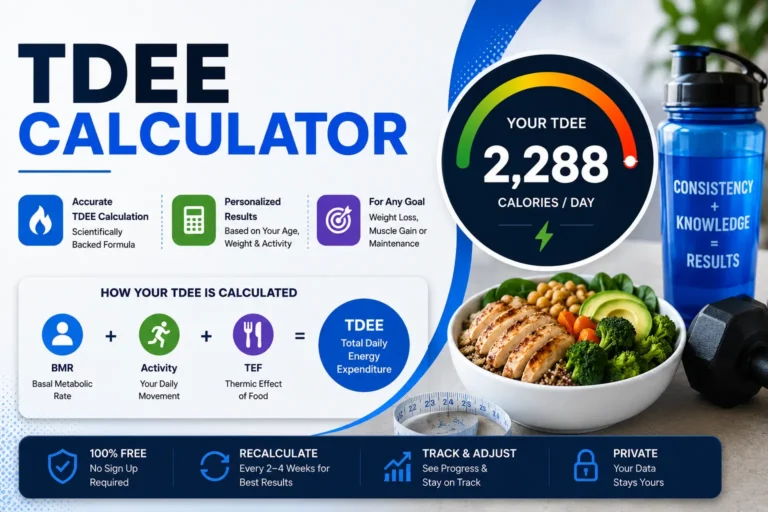
- Step 2: It estimates your Total Daily Energy Expenditure (TDEE) — the number of calories you actually burn per day based on your activity level.Want to check your TDEE on its own first? Try our TDEE Calculator.
- Step 3: It adds a small, controlled calorie surplus to your TDEE to support lean muscle growth.
- Step 4: It divides your total calories into protein, carbohydrates, and fats — giving you a complete daily nutrition plan.
The calculator uses the scientifically backed Revised Harris-Benedict Formula (Roza & Shizgal, 1984) for accurate, personalized results.
Inputs Used in the James Smith Muscle Gain Calculator
To estimate your personalized muscle-gain targets, the calculator uses:
- Age
- Gender
- Height
- Weight
- Activity level
- Body type
These details help the calculator estimate your daily calorie needs and provide personalized calorie, protein, and macro targets for your muscle-gain goal.
How Many Calories Do You Need for Muscle Growth?
This is the most common question — and here is the honest answer.
First, calculate your maintenance calories (TDEE). Then, add a small controlled surplus on top.
A common starting point is a calorie surplus of around 250–350 calories per day.
That’s it. Not 1,000 extra. Not 600. Not “eat until you’re stuffed.”
A small, controlled surplus gives you:
- Maximum muscle gain
- Minimal fat gain
- Better long-term results
Example:
- Your TDEE = 2,200 calories
- Muscle gain target = 2,450–2,550 calories
Lean Bulk vs. Dirty Bulk — What’s the Difference?
| Type | Calorie Surplus | Result |
|---|---|---|
| Lean Bulk Recommended | 250–350 kcal above TDEE | Slow, clean muscle gain — less fat |
| Dirty Bulk Risky | 500–1000+ kcal above TDEE | Faster weight gain — but mostly fat |
Which one should you choose? Lean bulk. Every time.
Yes, it’s slower. Yes, it requires more patience. Dirty bulking can lead to unnecessary fat gain without necessarily producing faster muscle growth.
Can You Gain Muscle Without Gaining Too Much Fat?
You can minimise fat gain during a muscle-building phase by using a small calorie surplus, getting enough protein, following progressive resistance training, and monitoring your body weight over time. A lean bulk focuses on gradual muscle gain rather than rapidly increasing calories.
How Much Protein Do You Need to Gain Muscle?
Here’s the truth: you can have the perfect calorie target and still fail to build muscle. Why? Protein plays an important role in muscle repair and growth. Getting enough protein each day can help support recovery and muscle development when combined with resistance training.
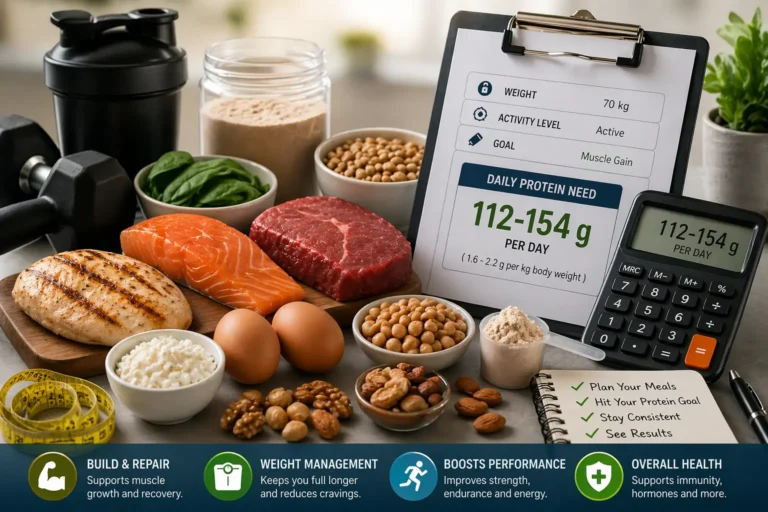
Science-backed protein target: 1.6 to 2.2 grams of protein per kg of body weight per day. For a precise number based on your exact body weight and goal, use our Protein Intake Calculator.
Daily Protein Intake Chart Based on Body Weight
| Body Weight | Daily Protein Target |
|---|---|
| 55 kg | 88g – 121g |
| 60 kg | 96g – 132g |
| 70 kg | 112g – 154g |
| 80 kg | 128g – 176g |
| 90 kg | 144g – 198g |
| 100 kg | 160g – 220g |
Simple Protein Formula
Body Weight (kg) × 1.6–2.2 = Daily Protein Intake (grams)
This range provides a practical starting point for planning daily protein intake during a muscle-building phase.
Muscle Gain Calculator for Beginners
Beginners can use a muscle gain calculator to estimate their daily calorie, protein, and macro targets before starting a muscle-building routine. Because beginners may respond differently to resistance training, the calculator should be treated as a starting point rather than a guarantee of how much muscle you will gain.
Protein, Carbs, and Fats: Macro Breakdown for Muscle Gain
Calories alone are not enough — you also need the right macronutrient balance.
Recommended Macro Split for Muscle Gain:
| Macronutrient | Percentage | Purpose |
|---|---|---|
| Protein | 25–30% | Muscle repair and growth |
| Carbohydrates | 40–50% | Energy for training and recovery |
| Fats | 20–25% | Hormones, vitamins, overall health |
Carbohydrates can help support training performance and provide energy for resistance training, while dietary fats contribute to normal hormone function and overall health.
How Fast Can You Build Muscle?
Muscle gain varies considerably between individuals. Beginners may gain muscle faster than experienced lifters, while progress generally slows as training experience increases. Changes in body weight can also include water, glycogen, and body fat, so scale weight alone should not be used as the sole measure of muscle gain.
This is where most people get frustrated — they expect fast results but don’t understand how muscle actually grows. Here’s an honest, experience-based breakdown:
Muscle Gain Calculator for Females
Women can use the same basic principles of muscle growth: adequate calories, sufficient protein, resistance training, and recovery. The calculator uses individual information such as age, weight, height, gender, and activity level to estimate calorie and macro targets.
For women, the goal should be gradual progress rather than trying to gain weight as quickly as possible.
Can you lose fat and build muscle at the same time?
Yes — but it’s slower and it only works for specific people.
This is called body recomposition. And before you get too excited — it’s not magic. It works best for:
- Complete beginners who have never trained before
- People are returning to training after a long break.
- People who are overweight and new to strength training
For body recomposition, the strategy is:
- Keep calories near your maintenance level (not in a large surplus)
- Keep protein very high (2.0–2.2g per kg)
- Focus entirely on progressive overload strength training.
- Be patient — results come more slowly than with a dedicated lean bulk.
For many people with more training experience, a small calorie surplus may provide a more straightforward approach to gaining muscle.
Common Mistakes to Avoid
Avoid these common mistakes when trying to build muscle:
- Eating too little — Not eating enough calories can make it harder to support muscle growth.
- Ignoring protein — Make sure your daily protein intake is high enough to support muscle repair and growth.
- Dirty bulking — Eating far more calories than you need can lead to unnecessary fat gain.
- Changing your plan too often — Give your nutrition and training plan enough time to work before making major changes.
- Skipping strength training — A calorie surplus alone does not build muscle; progressive resistance training is essential.
- Not getting enough sleep — Poor recovery can make it harder to perform and progress consistently.
Muscle Gain Training and Recovery Tips
The calculator gives you calorie and macro targets, but your training and recovery also play an important role in muscle growth.
- Focus on progressive overload — Gradually increase the weight, reps, or training volume over time.
- Use compound movements—Exercises such as squats, deadlifts, bench presses, and rows—to train multiple muscle groups.
- Prioritise recovery — Give your muscles enough time to recover between training sessions.
- Get enough sleep — Aim for 7–9 hours each night to support recovery and training performance.
- Track your strength and progress — monitor your lifts, body weight, and overall progress to see whether your plan is working.
Real-Life Examples of Muscle Gain
💪 Example 1 — Male (Muscle Gain)
| Detail | Numbers |
|---|---|
| Weight | 75 kg |
| TDEE | 2,400 Calories |
| Muscle Gain Target | 2,650 Calories |
| Protein Target | 120g – 165g |
| Experience Level | Beginner |
| Expected Monthly Gain | 1.0 – 1.5 kg |
♀️ Example 2 — Female (Muscle Gain)
| Detail | Numbers |
|---|---|
| Weight | 60 kg |
| TDEE | 1,800 Calories |
| Muscle Gain Target | 2,000–2,050 Calories |
| Protein Target | 96g–132g |
| Experience Level | Intermediate |
| Expected Monthly Gain | 0.4–0.8 kg |
Frequently Asked Questions
Final Thoughts: Why Use a Muscle Gain Calculator
Building muscle requires a combination of appropriate calorie intake, sufficient protein, progressive resistance training, and consistent recovery. The James Smith Muscle Gain Calculator gives you a personalised starting point for your daily calories, protein, and macronutrient targets based on your body and activity level.
Use your results consistently, monitor your progress, and adjust your intake as your body and training change.
Ready to build lean muscle — the right way?
Stop following random plans that weren’t made for your body. The James Smith Muscle Gain Calculator gives you your exact daily calories, protein target, and complete macro breakdown — personalized to you.
- Free to use
- Takes less than 60 seconds
- No guessing, no bro-science
No signup required. Just real numbers for real results.