High Protein Foods UK: Easy List With Protein Per 100g
Most of us know that protein keeps you full, helps your muscles recover, and makes weight management easier. The hard part is knowing which high-protein foods are actually worth buying. Walk down any supermarket aisle, and you’ll see “high protein” stamped on everything from yoghurts to crisps, and it’s not always clear what’s genuinely good.
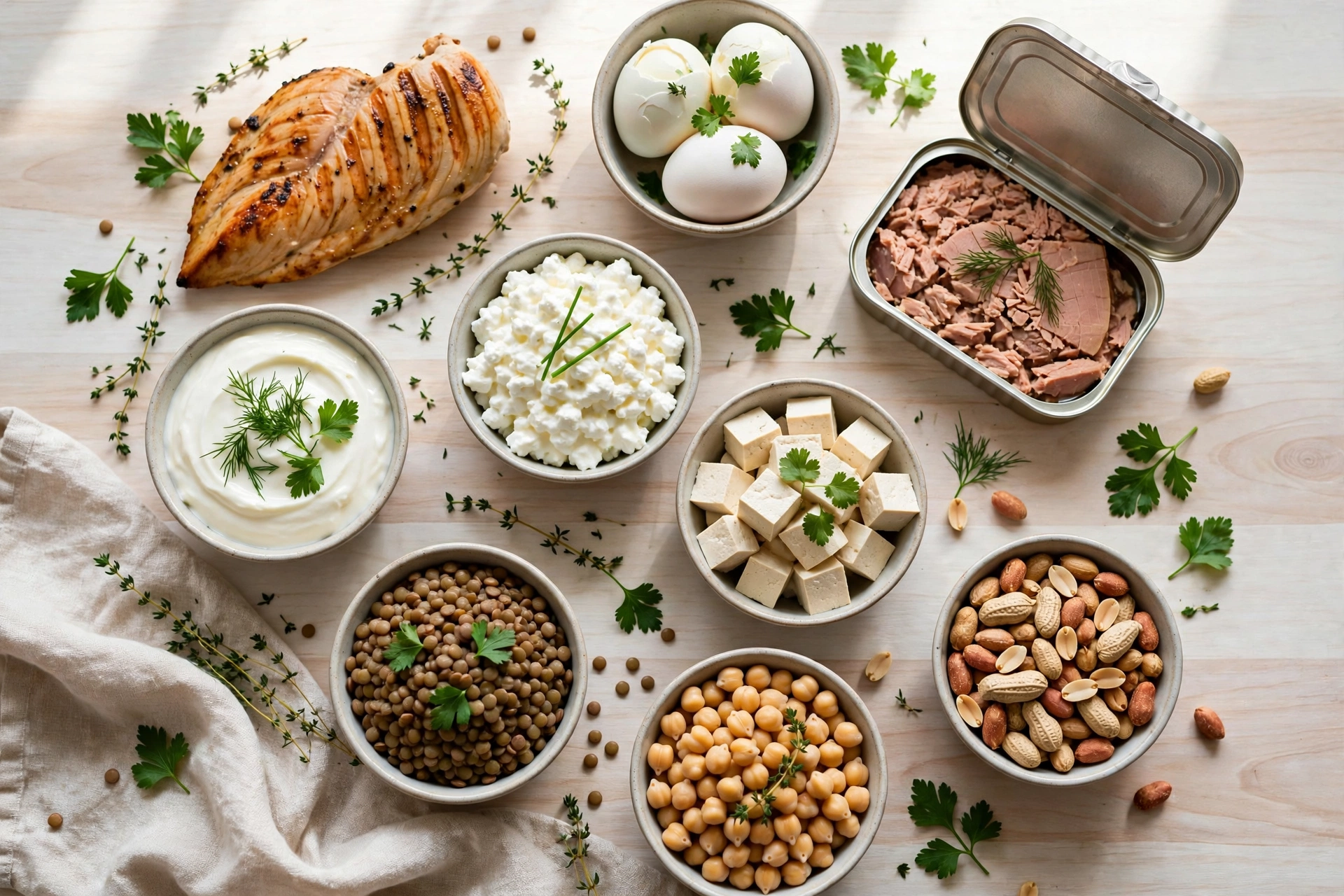
This guide keeps things simple. You’ll find the best high protein foods you can buy in UK shops, with the protein in 100g of each one. There are meat, fish, dairy, vegetarian and vegan options, plus easy snack ideas and cheap picks for a tight budget.
What Counts as a High Protein Food?
In the UK, a food can only be labelled “high protein” if at least 20% of its energy comes from protein. “Source of protein” needs at least 12%. It’s a handy rule to know, because some products with a protein label are mostly sugar or fat with a little protein added.
An easier way to judge a food is to check the protein per 100g on the label. As a rule of thumb, 10g or more per 100g is a solid choice, and 20g or more is excellent.
How Much Protein Do You Need Each Day?
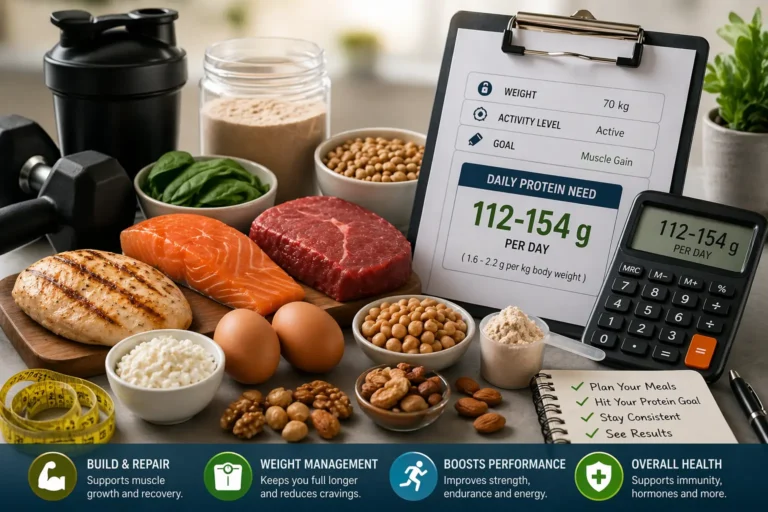
The UK guideline for adults is about 0.75g of protein per kilogram of body weight each day. For someone who weighs 70kg, that’s roughly 52g. This is the amount needed to stay healthy, not a target for people who train hard.
If you lift weights, run often or are trying to lose fat, you may need more. As a general guide, in line with this site’s Protein Intake Calculator: active adults around 1.2g to 1.6g per kilo, fat loss around 1.6g to 2.2g per kilo, and muscle gain around 1.8g to 2.5g per kilo. The right number depends on your size, goal and activity level. For a personal figure, try the Protein Intake Calculator, which works it out from your weight and goal in a few seconds.
If you have a kidney condition or another health issue, speak to your GP or a dietitian before making big changes to your protein intake.
Quick Reference
UK guideline (RNI): 0.75g per kg of body weight each day — about 52g for someone who weighs 70kg.
Active adults: 1.2–1.6g per kg. Fat loss: 1.6–2.2g per kg. Muscle gain: 1.8–2.5g per kg.
The Best High Protein Foods List (Protein Per 100g)
The numbers below are approximate. They refer to cooked weight for meat, fish and legumes, and to the food as sold for dairy, cheese, nuts and soya foods. Brands vary, so always check the label on what you buy.
Meat and poultry
| Food | Protein per 100g |
|---|---|
| Chicken breast, cooked | about 31g |
| Turkey breast, cooked | about 29g |
| Pork loin, cooked and trimmed | about 27g |
| Lean beef mince (5% fat), cooked | about 26g |
Chicken and turkey are the easiest wins. They’re lean, fairly cheap in most shops and work in almost any meal.
Fish and seafood
| Food | Protein per 100g |
|---|---|
| Tuna, tinned in water and drained | about 24g |
| Salmon, cooked | about 22g |
| Cod, cooked | about 20g |
| Prawns, cooked | about 22g |
Tinned tuna is one of the simplest high protein foods you can keep in the cupboard. Salmon also gives you omega-3 fats, which is a nice bonus.
Eggs and dairy
| Food | Protein per 100g |
|---|---|
| Eggs | about 13g (roughly 6g per medium egg) |
| Cheddar cheese | about 25g |
| Quark | about 12g |
| Skyr | about 11g |
| Cottage cheese | about 11g |
| Fat-free Greek yoghurt | about 10g |
Cheese is high in protein but also high in fat and calories, so keep an eye on portion size. Skyr, quark and cottage cheese give you plenty of protein for far fewer calories.
Plant-based protein
| Food | Protein per 100g |
|---|---|
| Peanuts | about 25g |
| Tempeh | about 19g |
| Tofu, firm | about 12g |
| Edamame beans | about 11g |
| Lentils, cooked | about 9g |
| Chickpeas, cooked | about 8g |
| Kidney beans, cooked | about 8g |
Plant foods often have less protein per 100g than meat, but they come with fibre, which meat doesn’t have.
High Protein Vegetarian Foods
If you don’t eat meat, getting enough protein is very doable. The best high protein vegetarian foods are eggs, Greek yoghurt, skyr, cottage cheese, tofu, tempeh, lentils, beans and nuts. Vegans can lean on tofu, tempeh, beans, lentils, edamame and soya milk instead.
The trick is to include a protein source in every meal. A lentil curry with rice, a tofu stir fry or a bean chilli each give a good amount. Mixing different plant foods through the day works well, and you don’t need to combine them in the same meal.
High Protein Snacks That Actually Fill You Up
Snacks are where many people miss out on protein. These are simple, cheap and need almost no cooking:
- A boiled egg or two
- Fat-free Greek yoghurt with berries
- Cottage cheese on oatcakes
- A tub of skyr
- A small handful of nuts (about 30g)
- Edamame beans with a pinch of salt
- Tinned tuna on rice cakes
- Roasted chickpeas
Be careful with protein bars and “high protein” crisps. Some are useful, but many are high in sugar or calories. Check the label before you buy.
Cheap High Protein Foods
Eating more protein doesn’t have to cost a lot. These are usually the best value:
- Eggs
- Tinned tuna
- Dried or tinned lentils, chickpeas and beans
- Frozen chicken breast and frozen fish fillets
- Cottage cheese
- Porridge oats made with milk
- Peanut butter (watch the portion, as it is high in calories)
- Supermarket own-brand versions of the foods above
Here’s a quick trick: divide the price of a product by the grams of protein it contains. This shows you the real cost of protein, and it often proves that basic foods beat fancy protein-labelled ones. Tinned and frozen foods are also great, because they’re cheaper and last longer.
High Protein Foods for Weight Loss
Protein helps you feel full for longer, which can make eating less food easier to stick to. It also helps protect your muscle while you lose fat. The best picks are lean ones, because you get lots of protein for few calories:
- Chicken and turkey breast
- White fish such as cod
- Fat-free Greek yoghurt, skyr and cottage cheese
- Eggs
- Tofu
- Beans and lentils
Protein alone won’t cause weight loss. You still need to eat fewer calories than you burn. To see what that looks like for you, use the Calorie Deficit Calculator and then build your meals around the foods above.
Easy Ways to Eat More Protein
You don’t need a complicated plan. A few small habits are enough:
- Build each meal around a protein first, then add carbs and vegetables.
- Start your day with eggs, yoghurt or porridge made with milk instead of just toast.
- Keep tinned tuna, beans and frozen chicken in the house for busy days.
- Add lentils or beans to soups, curries and pasta sauces.
- Spread protein across the day instead of eating most of it at dinner.
Here’s what a simple day could look like: porridge with Greek yoghurt for breakfast, a tuna and bean salad for lunch, cottage cheese on oatcakes as a snack, and a chicken stir fry with vegetables for dinner. That gets most people well past the daily minimum.
Frequently Asked Questions
Which foods are the highest in protein?
Lean meat, fish, eggs, dairy, soya foods and legumes are the top sources. Chicken and turkey breast lead the list at around 29g to 31g per 100g cooked.
Which vegetable has the most protein?
Edamame beans and green peas are among the best, but vegetables give modest amounts overall. For more protein, add beans, lentils or tofu.
Is it safe to eat high protein foods every day?
For most healthy adults, yes, as part of a balanced diet. If you have kidney problems or another medical condition, check with your GP or dietitian first.
Can I get enough protein without meat?
Yes. Eggs, dairy, tofu, tempeh, beans, lentils and nuts can easily cover your needs if you include them regularly.
How much protein should I eat per meal?
Many people aim for roughly 20g to 40g per meal, spread across the day. Your total for the day matters more than hitting an exact number at every meal.
Final Thoughts
High protein foods don’t have to be expensive or complicated. Chicken, eggs, tuna, yoghurt, beans and lentils do the job, and you can find all of them in any UK supermarket. Pick a protein for every meal, check the label for protein per 100g, and keep a few cheap staples in the cupboard.
Not sure how much you need? Use the Protein Intake Calculator to get a number that fits your weight and goal.
This guide gives general educational information only. It is not medical advice. If you have a health condition, speak to your GP or a registered dietitian before changing your diet. This is an independent guide, not affiliated with or endorsed by James Smith Academy.