James Smith Fat Loss Calculator – Calories & Macros for Fat Loss
What if you could know how many calories your body needs to lose fat—without guessing?
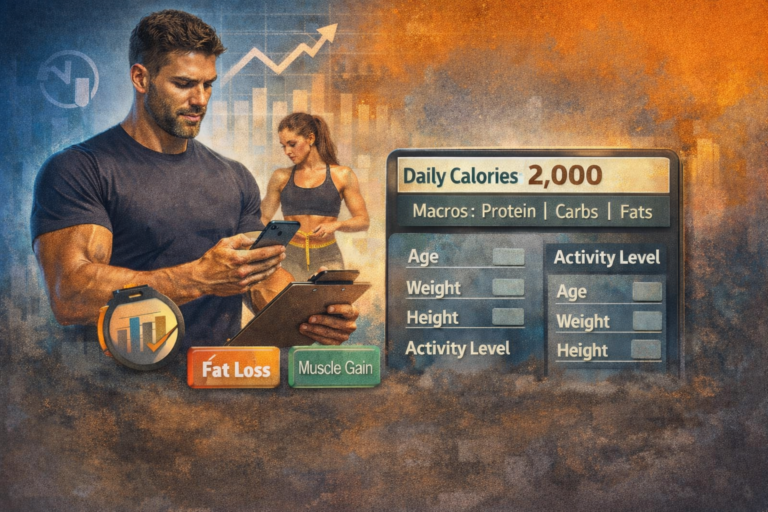
The James Smith Fat Loss Calculator helps you estimate a personalised calorie target, calorie deficit, and macro breakdown based on your body and lifestyle. Instead of relying on generic diet plans, this calculator uses your age, gender, weight, height, activity level, and fat-loss goal to give you a more tailored starting point.
Whether you want to lose body fat, improve your body composition, or start a sustainable weight-loss journey, this guide explains how the calculator works and how to use your results.
<18.5 Normal
18.5–25 Over
25–30 Obese
>30
How to Use the James Smith Fat Loss Calculator
Using the calculator is simple. Enter your personal information, measurements, activity level, and fat loss goal. The calculator then estimates your daily calories, calorie deficit, BMR, maintenance calories, and recommended macros.
What Is a Fat Loss Calculator?
A fat loss calculator is a tool that estimates how many calories you may need to eat each day to support fat loss. It uses information about your body and activity level to estimate your daily energy needs and apply a calorie deficit.
It is also known as:
- Calorie calculator for fat loss
- Body fat loss calculator
- Fat loss calorie calculator
How the James Smith Fat Loss Calculator Works
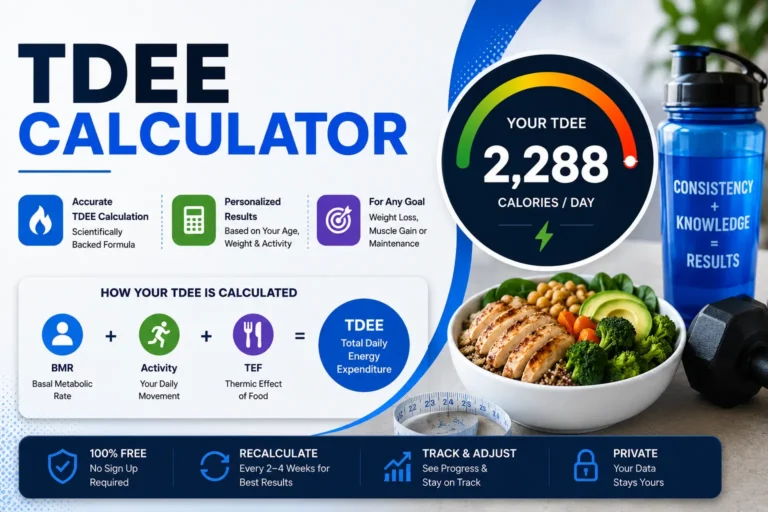
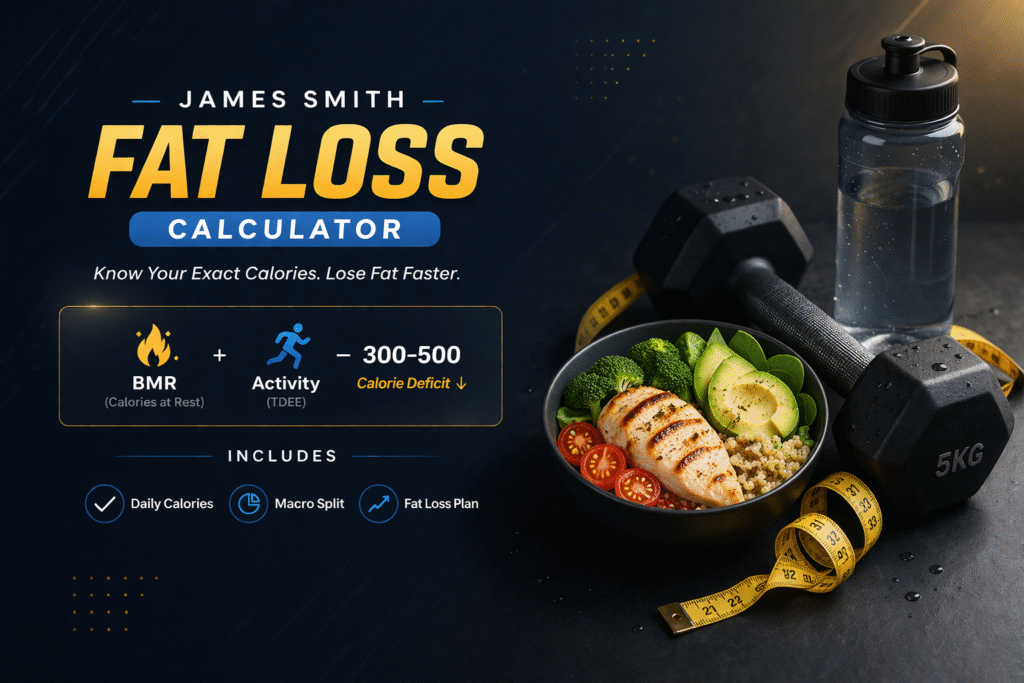
The James Smith Fat Loss Calculator follows a simple scientific process:
Step 1: Calculate BMR
Your Basal Metabolic Rate (BMR) is the number of calories your body needs at rest.
Step 2: Calculate TDEE
It adjusts your BMR based on your daily activity level to estimate total calories burned.
Step 3: Apply Calorie Deficit
A small calorie deficit helps you lose fat safely without harming your body.
The BMR calculation used by this calculator is based on the Revised Harris-Benedict Formula (Roza & Shizgal, 1984), a commonly used equation for estimating basal metabolic rate.
Inputs Needed for the Calculator
To get accurate results, you need to enter:
- Age
- Weight
- Height
- Gender
- Activity level
- Fat loss goal
These inputs help generate personalized calorie and macro recommendations rather than relying on generic estimates.
How Many Calories Should You Eat to Lose Fat?
This is the most important question.
To lose fat, you must eat fewer calories than your body burns. If you are unsure about your daily calorie needs, check our Calorie Calculator for a personalized estimate.
The ideal method is:
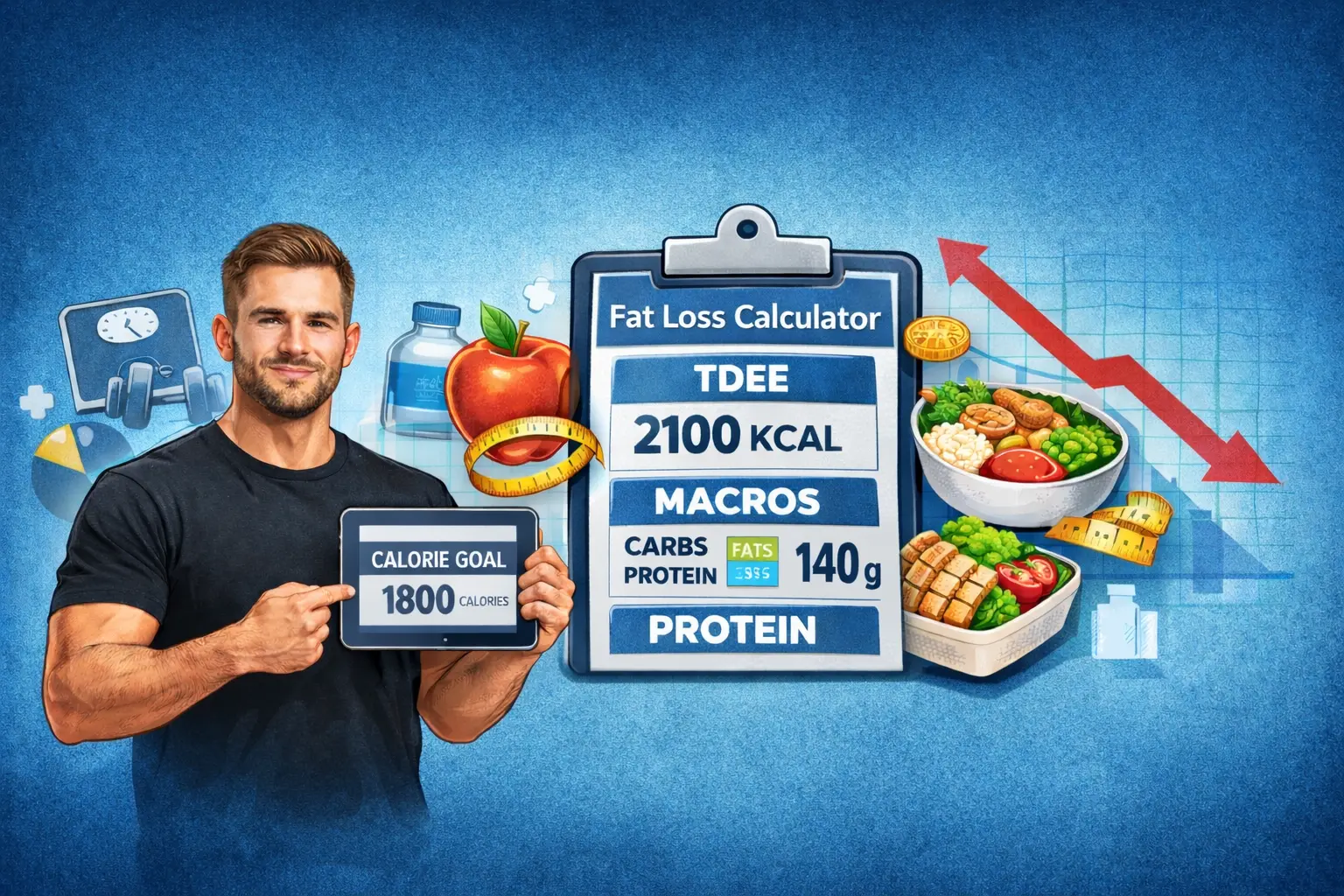
TDEE– 300 to 500 calories = Fat Loss Calories
| Person | TDEE | Target Calories |
|---|---|---|
| Male (75 kg) | 2500 | 2000–2200 |
| Female (60 kg) | 2000 | 1500–1700 |
A moderate calorie deficit can provide a practical starting point for fat loss while helping you maintain a sustainable eating pattern.
- Supports gradual fat loss
- Can make it easier to maintain muscle alongside adequate protein and resistance training
- May be easier to sustain than a very large deficit
Macro Calculator for Fat Loss
Calories are important—but macros (protein, carbs, fats) matter too. A macro calculator for fat loss helps you strike the right balance of calories.
Example macro distribution:
The following is an example distribution; individual macro needs can vary based on goals, preferences, and activity level.
| Macronutrient | Percentage | Role |
|---|---|---|
| Protein | 30–35% | Muscle protection |
| Carbs | 35–40% | Energy |
| Fats | 25–30% | Hormones & health |
Protein Calculator for Fat Loss
Protein is the most important nutrient during fat loss.
Recommended intake:
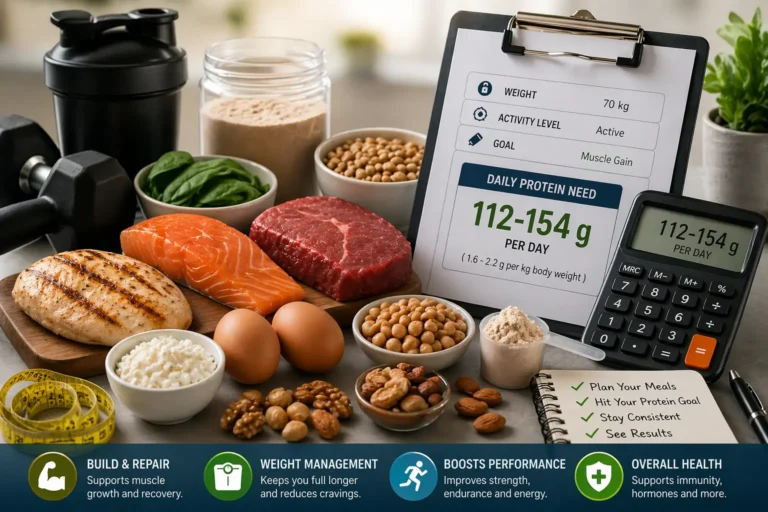
1.6 to 2.2 grams per kg of body weight
| Weight | 70 kg |
| TDEE | 2200 calories |
| Fat Loss Calories | 1800 calories |
| Protein | 130g |
Protein helps you:
- Preserve muscle
- Stay full longer
- Improve recovery
- Boost metabolism
Fat Loss Calculator for Females
Women often believe that fat loss differs significantly from men’s, but the fundamental principles remain the same.
For females, calorie needs are estimated using the same fundamental principles while accounting for factors such as age, height, weight, activity level, and fat-loss goals.
Key Points:
- Slightly lower calorie intake than men
- Balanced macros
- Focus on strength training
Important: Fat loss improves body shape, metabolism, and long-term health.
Combining Fat Loss With Strength Training
The best results come when you combine diet with training.
It is called body recomposition.
Benefits:
- Lose fat
- Maintain or build muscle
- Improve overall body shape
Tips:
- Lift weights 3–5 times per week
- Focus on progressive overload
- Add light cardio if needed
Common Mistakes to Avoid
Even with a calculator, people make mistakes:
❌ Eating too few calories
❌ Ignoring protein intake
❌ Not tracking progress
❌ Skipping workouts
❌ Changing diet too often
Remember: Consistency is the key to fat loss.
Tips for Sustainable Fat Loss
Track your calories daily
✔ Eat high-protein meals
✔ Stay active
✔ Sleep 7–9 hours
✔ Drink enough water
✔ Be consistent for at least 8–12 weeks
Healthy fat loss is usually:
A commonly recommended gradual rate is around 0.5–1 kg per week, although the appropriate rate varies from person to person.
FAQs About the James Smith Fat Loss Calculator
Final Thoughts – Why Use the Calculator
The James Smith Fat Loss Calculator gives you a practical starting point for setting your daily calorie target and macros. Use your results alongside consistent nutrition, activity, and progress tracking to build a sustainable fat-loss routine.
Use the James Smith Fat Loss Calculator as a starting point for setting your calorie and macro targets, then track your progress and adjust your approach as needed.
🔥 Ready to Start Losing Fat?
Stop guessing your calories and macros. Use the James Smith Fat Loss Calculator to get your personalized calorie target, macro breakdown, and fat-loss plan in under 60 seconds.
Calculate My Fat Loss Calories →Similar Posts
James Smith Calorie Calculator: Complete Guide for Fat Loss & Muscle Gain
If you exercise regularly but still aren’t losing fat or building muscle, the real problem isn’t your workout — it’s your nutrition. You simply cannot out-train a bad diet. This is where the James Smith Calorie Calculator comes in. This free tool is used by thousands of people every day to take control of their…
Protein Intake Calculator 2026: Find Your Daily Protein Needs Instantly
Most people trying to lose weight focus on calories — but they completely ignore protein. And that’s exactly why they end up losing muscle instead of fat, feeling hungry all day, and giving up too soon. Protein is the one macronutrient that keeps you full, protects your muscle, and actually speeds up fat loss. But…
James Smith Maintenance Calorie Calculator – Free Tool 2026
The Maintenance Calorie Calculator helps you estimate how many calories you need each day to maintain your current weight. Enter your age, height, weight, and activity level to calculate your estimated daily maintenance calories. Imagine two people. They’re the same height and weight. Yet they eat very different amounts of food each day. Still, both…
James Smith TDEE Calculator – Free Calorie & Energy Calculator 2026
If you’ve ever wondered exactly how many calories your body burns in a normal day, TDEE is the number you’re looking for. Not a rough guess. Not a generic chart. Your actual, personalised daily energy burn — the number every serious fat loss, muscle gain, or maintenance plan should be built on. The James Smith…
The Ultimate James Smith Calorie Deficit Calculator 2026
Calorie Deficit Calculator 🔥 Calorie Deficit Calculator Free · No Sign-up Units Metric (kg/cm) Imperial (lbs/in) Age Gender MaleFemale Weight (kg) Height (cm) Activity Level Sedentary — desk job, little movementLightly Active — 1–3 workouts/weekModerately Active — 3–5 workouts/weekVery Active — 6–7 intense sessions/weekExtremely Active — physical job + hard training Calculate My Calorie Deficit…
Free Macro Calculator for Weight Loss: Lose Fat Without Guesswork
If you’ve ever stood in your kitchen wondering whether you’re eating too much or too little, you’re not alone. Most people trying to lose weight focus only on calories. They count every bite, feel guilty about every snack, and still don’t see the results they expect on the scale. Here’s the part nobody tells you:…